The most common question we get from Oregon homeowners thinking about solar is some version of: 'But isn't Oregon too cloudy for solar to be worth it?' The honest answer surprises most people. Oregon actually has better solar economics than Germany — the world's largest solar market by installed capacity. This guide breaks down the real 2026 math: what solar costs in Oregon, what the rebates and tax credits actually return, and what the payback period looks like for a typical home.
What Oregon solar actually costs in 2026
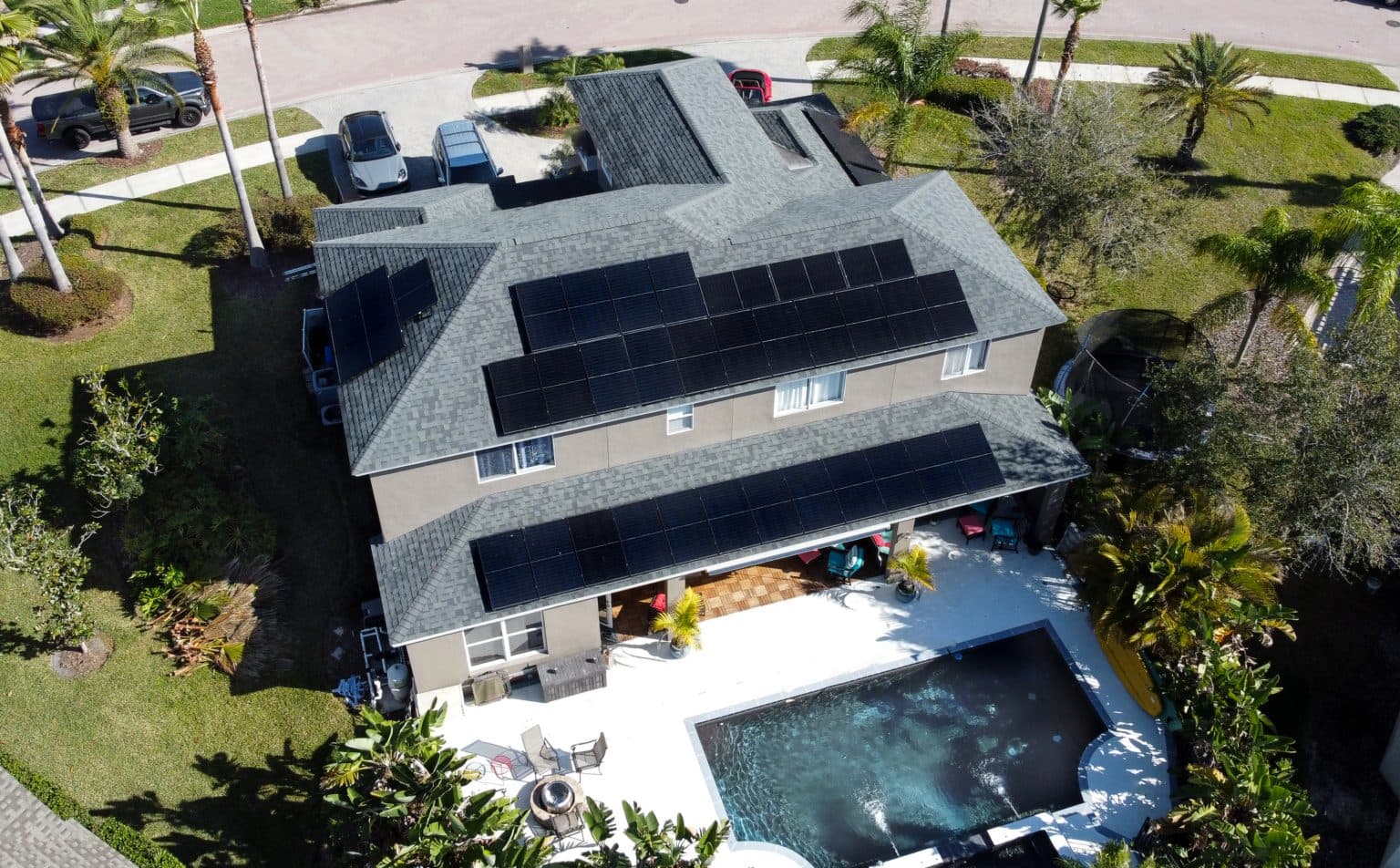
A typical residential Oregon solar system in 2026 — 8 to 10 kilowatts (kW) of panel capacity covering 80–95% of average household electricity usage — has a gross install cost of $24,000 to $32,000. That's before any rebates or tax credits. After the federal Residential Clean Energy Credit (30%) and the Energy Trust of Oregon rebate ($0.20–$0.30 per watt installed, capped at $1,800 for most residential systems), the net out-of-pocket cost drops to $14,500 to $21,000. Adding a Tesla Powerwall 3 for battery backup adds roughly $12,000–$15,000 after incentives.
Will Oregon weather produce enough solar?
Yes — and the reason has less to do with sunshine and more to do with temperature. Solar panels are actually less efficient in extreme heat. Oregon's cooler temperatures and long summer daylight (15+ hours in June) produce strong annual yields. A 10 kW system in Portland produces roughly 11,000 to 12,500 kWh per year — enough to offset 100% of a typical household's annual usage. Eugene and Medford produce 10–15% more than Portland due to cleaner summer skies. Bend produces 20%+ more thanks to high altitude and low humidity.
The winter-summer banking trick
Oregon solar doesn't need to produce evenly year-round — it just needs to produce enough over the year. PGE and Pacific Power both offer net metering, which means excess summer production gets banked as credits that roll over into the winter months. A well-sized Oregon system generates a credit surplus June through September that covers the October–February deficit. Net result: a zero-dollar annual electric bill for most Oregon solar homeowners.
What if I need more power than a typical home?
Oregon homes with electric heat pumps, EV chargers, or hot tubs can have 2–3× the average household electricity demand. The good news: solar scales easily. A 13 kW system (instead of 10 kW) costs roughly $4,000–$6,000 more but easily covers heat pump + EV loads. If your roof can't fit a big enough array, a ground-mount system in the backyard is an option (common in Central and Eastern Oregon properties with acreage).
The real payback math
Payback depends on three variables: your net cost after incentives, your current electricity bill, and whether PGE/Pacific Power rates go up over time (they do). For a typical Oregon homeowner with a $180/month electricity bill, a $17,000 net solar install pays back in 7.5 to 9 years. After payback, the system continues producing free electricity for another 16–18 years (panel warranties run 25 years, real-world lifespan is 30+). Total lifetime savings over 25 years for most Oregon solar owners: $35,000 to $55,000 in avoided electricity costs.
What you need to watch out for
Oregon solar is a strong investment but the industry has bad actors. Here's what to refuse:
Door-to-door solar reps
We see Oregon door-to-door reps quote $45K–$68K for systems that licensed local installers do for $24K–$32K. The markup funds the sales commission. Never sign a solar contract on your front porch. Never sign during the first sales visit, regardless of the pitch.
25-year 'included' lease or PPA deals
Power Purchase Agreements (PPA) and leases let you 'go solar with zero down.' The catch: you don't own the system and you don't get the tax credit or rebate — the solar company does. You pay them for electricity at a rate that escalates annually. For most Oregon homeowners, buying (cash or loan) returns 2–3× more over 25 years than a PPA.
No-name Tier-2 or Tier-3 panels
A reputable Oregon solar installer spec's Tier-1 manufacturer panels (REC, Panasonic, SunPower, LG) with 25-year manufacturer warranties. If the installer won't tell you the panel brand before you sign, they're hiding something. Cheap panels fail earlier and lose efficiency faster — the bargain disappears by year 10.
Is solar actually right for your Oregon home?
Solar makes sense when four conditions are true: your roof is less than 15 years old (or you're replacing it anyway), your annual electric bill is over $1,200, your roof has reasonable south/west exposure without heavy shading, and you plan to stay in the home for at least 7 years. If one or two of those aren't true, solar might still make sense — but the math is closer to break-even. Our free Oregon solar site assessment includes a production estimate, a payback calculation, and an honest 'don't do it' recommendation when solar isn't right for a specific home. Not every Oregon house is a solar candidate, and we'll tell you when yours isn't.
The bottom line
Solar in Oregon in 2026 is one of the best residential energy investments available — but only if you choose the right installer, the right equipment, and the right system size for your actual usage. Skip the door-to-door pitch. Get a site-specific quote from a licensed Oregon installer who shows you the production math. Verify rebate eligibility before signing. If the numbers work, solar pays you back for 25+ years. If they don't, a good installer will tell you that and save you $30,000.
Ready for a written quote?
Itemized, fixed-price, delivered in 24 hours. Oregon CCB licensed & bonded.